
← Back to news
July 2, 2026
Why We Believe Distributed Modular Biorefineries Are the Future of Sargassum Management
At first glance, large centralized processing plants seem like the obvious answer to the sargassum crisis. In reality, the challenge is far more complex. Here's why we believe a modular approach makes more sense.
Every year, millions of tonnes of sargassum wash ashore across the Caribbean, affecting beaches, tourism, fisheries, coastal communities and public infrastructure.
The obvious question is often: Why not just build a large central processing plant?
A big part of the answer is logistics.
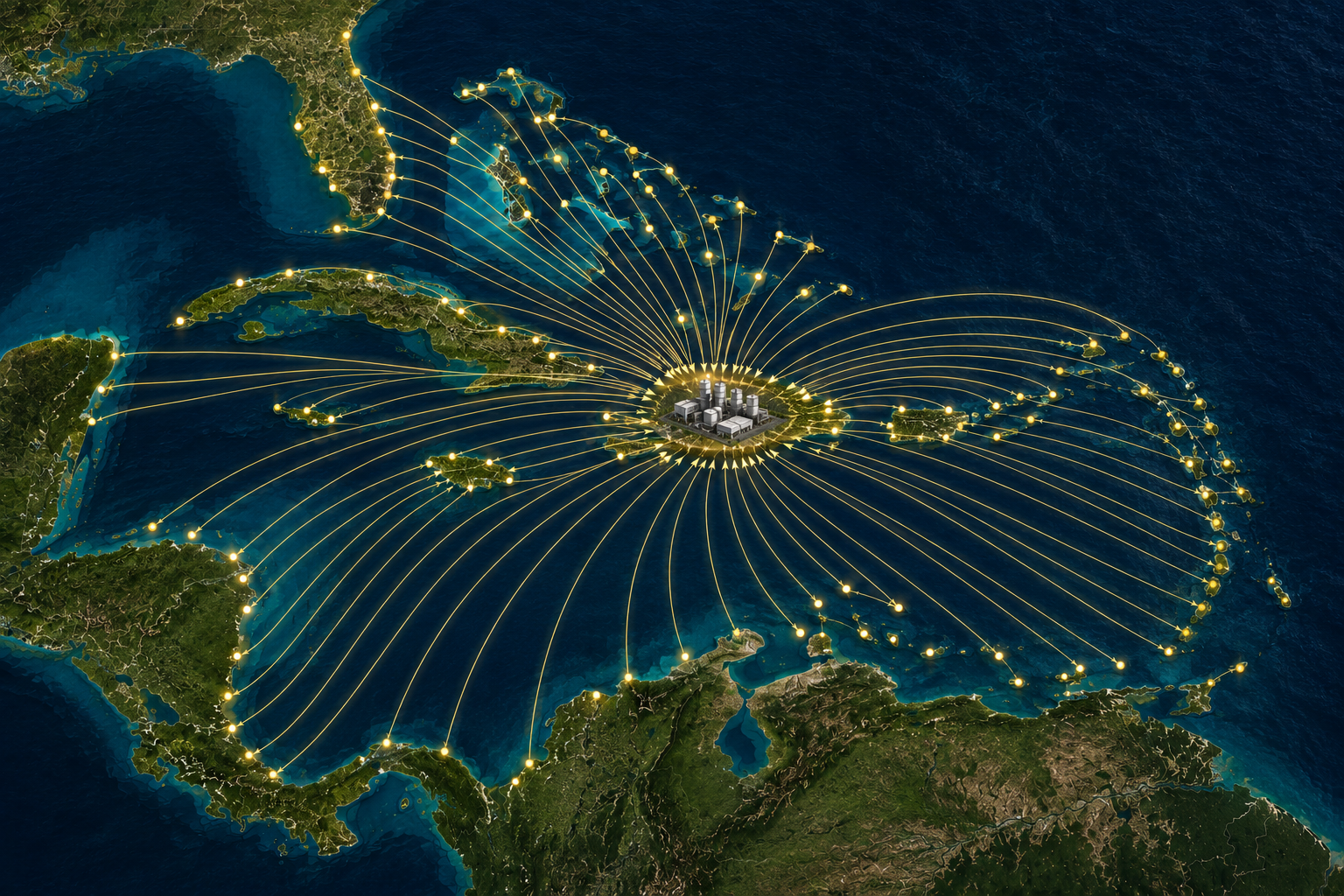
Sargassum doesn't arrive at a single location. It reaches hundreds of islands and thousands of kilometres of coastline, often in unpredictable volumes. With a centralized processing model, the biomass still has to be transported from countless collection points to a single facility, requiring infrastructure that simply doesn't exist across much of the region.
And logistics is only part of the picture. Large centralized facilities also require significant capital, lengthy permitting processes and years of construction before processing can even begin.
That's why we've chosen a different approach.
At Thalasso, we're developing modular biorefineries that can be deployed close to where the sargassum is collected. As demand grows, additional modules can be added instead of building entirely new facilities.
But location is only part of the equation.
Today, hotels, municipalities and governments spend significant resources managing sargassum. For many, it's become a recurring financial burden that competes with other important priorities.
We believe the key is creating enough value from the biomass itself.
By producing commercially valuable products, the economics become far more attractive. Instead of sargassum management being only a cost, stakeholders have the opportunity to recover part - or potentially all - of those costs through participation in the value chain.
For us, the future of sargassum management isn't just about removing biomass from beaches.
It's about building a model that is economically sustainable, scalable, and capable of creating new industries and jobs in the regions most affected.